The legacy of Marine Corps tankers
A driver, a gunner, a loader, and a commander: that was Michael Kondracki’s crew in the Marine Corps Reserve. His story is one part of a history that stretches back generations. The Marine Corps has retired its tank battalions, but their stories still belong to the Marines who served in them.
Vehicle gallery
Five tanks across five eras
Follow the crews from a ship bound for Tarawa to a Reserve training range in California. These are selected vehicles in Marine service, not a complete inventory.
Pacific · 1943
M4A2 Sherman
Before Tarawa, the 2d Marine Division had never operated with medium tanks. Fourteen Shermans arrived aboard the dock landing ship Ashland. The Marine Corps history even preserves individual vehicle names, including Colorado. Each Sherman carried a crew of five.
Read Across the Reef, the Marine Corps history of Tarawa (PDF)Korea · 1950
M26 Pershing
In the National Museum of the Marine Corps’ Korean War gallery, visitors encounter a Pershing in a reconstruction of a street in Seoul. Nearby, the Inchon landing exhibit sets the scene for how Marines reached the city. Together they place the vehicle in the landscape its crew knew.
Visit the museum’s Korean War gallery onlineVietnam · 1968
M48 Patton
At Huế, Marine M48 tanks served alongside the smaller tracked vehicle called the Ontos. They were different machines. The National Museum tells part of the M48’s story on the exhibit label for its neighbor: the Ontos. Reading that label puts both vehicles back on the same streets.
Explore the museum’s Ontos artifact and Huế accountPersian Gulf · 1991
M60A1 · Genesis II
This tank has a name and a paper trail. Its documented service in Kuwait during Operation Desert Storm led curators to select it for preservation. Years later, Marine Depot Maintenance Command in Albany, Georgia, restored Genesis II for the National Museum.
Read the Marine Corps restoration accountMarine Corps Reserve · 2018
M1A1 Abrams
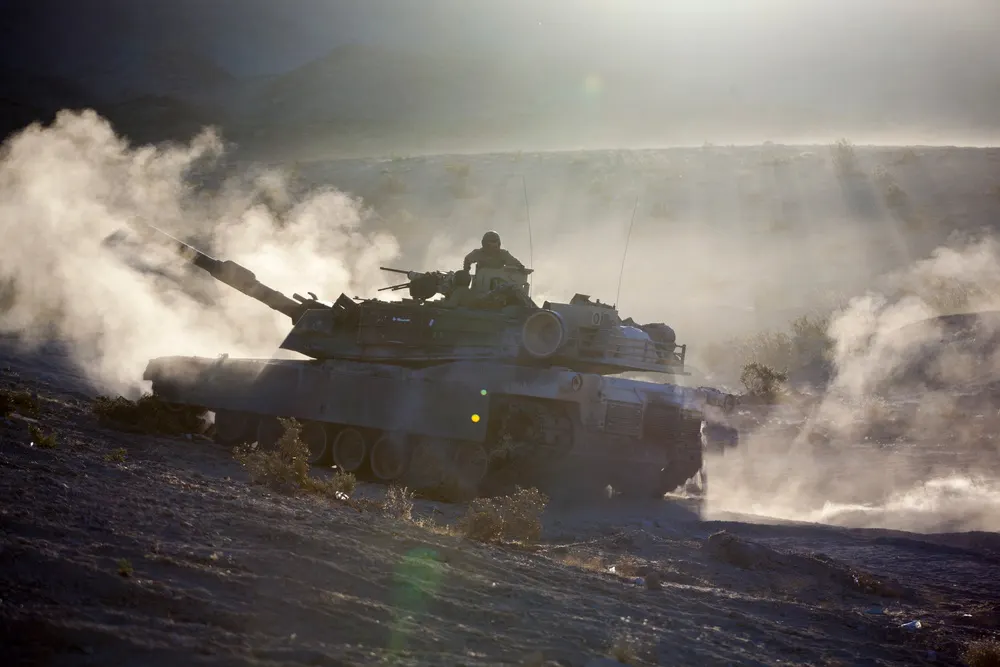
The Abrams brings the exhibit back to Echo Company. A Marine photographer recorded the company’s M1A1 at Twentynine Palms in June 2018. Michael remembers this model from the inside: four people, four jobs, and a crew that had to learn to trust one another.
View Echo Company’s M1A1 photograph in the archive
Unit gallery · Fort Knox, Kentucky
Echo Company, 4th Tank Battalion
“Echo Company, 4th Tanks” is how Michael Kondracki identifies his unit. Its formal name was Company E, 4th Tank Battalion. Two photographs tell different parts of its story: a meeting between generations and a company’s final formation.
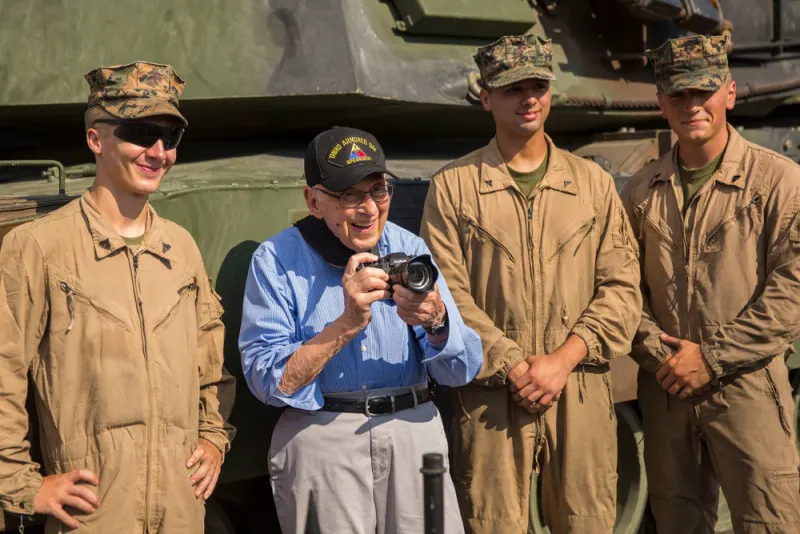
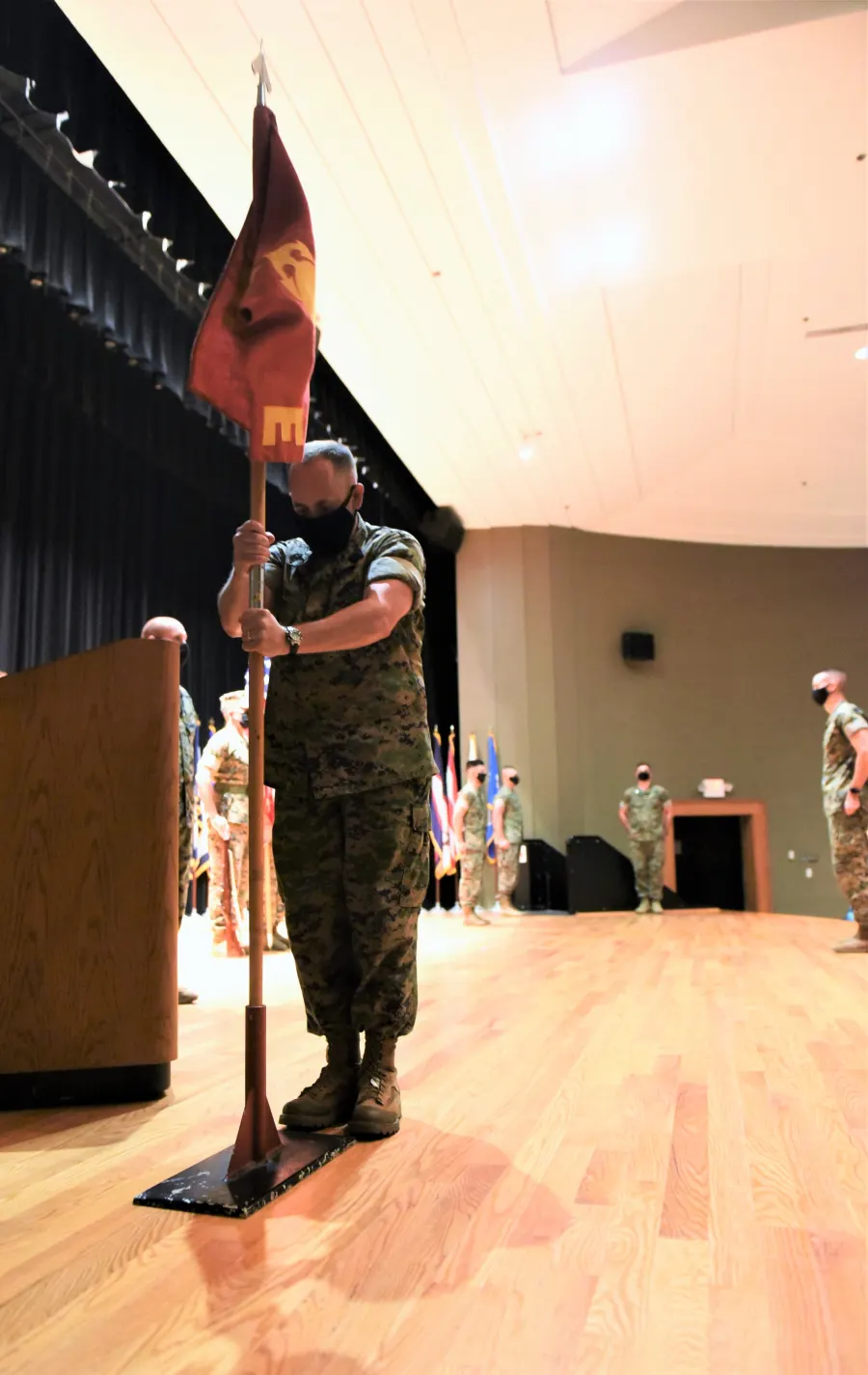
The archive photographs document Echo Company. They are not presented as photographs of Michael or of the range day in his essay. Read his own account of commanding a crew.
The story behind “53 Days”
One way into that history is through the 4th Tank Battalion. It began in 1943, during World War II. In the Korean War, just 53 days separated the reservists’ call to active duty and their participation in the landings at Inchon. The battalion kept that number as its motto: “53 Days.”
Later generations of its tankers served in Vietnam, the Gulf War, and Iraq. Decades later, when Alpha Company gathered at Camp Pendleton on July 18, 2020, to put away its unit colors, its commander credited the people in front of him, not the tanks, for the company’s success.
Read Camp Pendleton’s account of Alpha Company and its motto.
When the battalions cased their colors
Under Force Design 2030, the Marine Corps moved away from operating its own tank battalions as it refocused on its role alongside the Navy. The change reached active-duty and Reserve crews alike.
On May 5, 2021, the 2d Tank Battalion marked its deactivation at Camp Lejeune in North Carolina. Ten days later, on May 15, Marines gathered in San Diego for the Reserve’s 4th Tank Battalion farewell. Both ceremonies were recorded by Marines; you can watch them in the military’s public archive.
What Michael wants to carry forward
For Michael, the part of being a tanker worth passing on is how a crew looks out for its newest Marine. On his first range as a tank commander, that meant giving a young loader room to make a decision and the chance to try again. The moment he remembers is the one when the loader no longer looked to him for the answer.
VetComp Planner is how he puts that lesson to work now. He wants the veteran sitting at a kitchen table with a stack of paperwork to be able to decide what comes next for themselves.
Read Michael’s story: What My Tank Crew Taught Me About Looking Out for the Next Marine.